
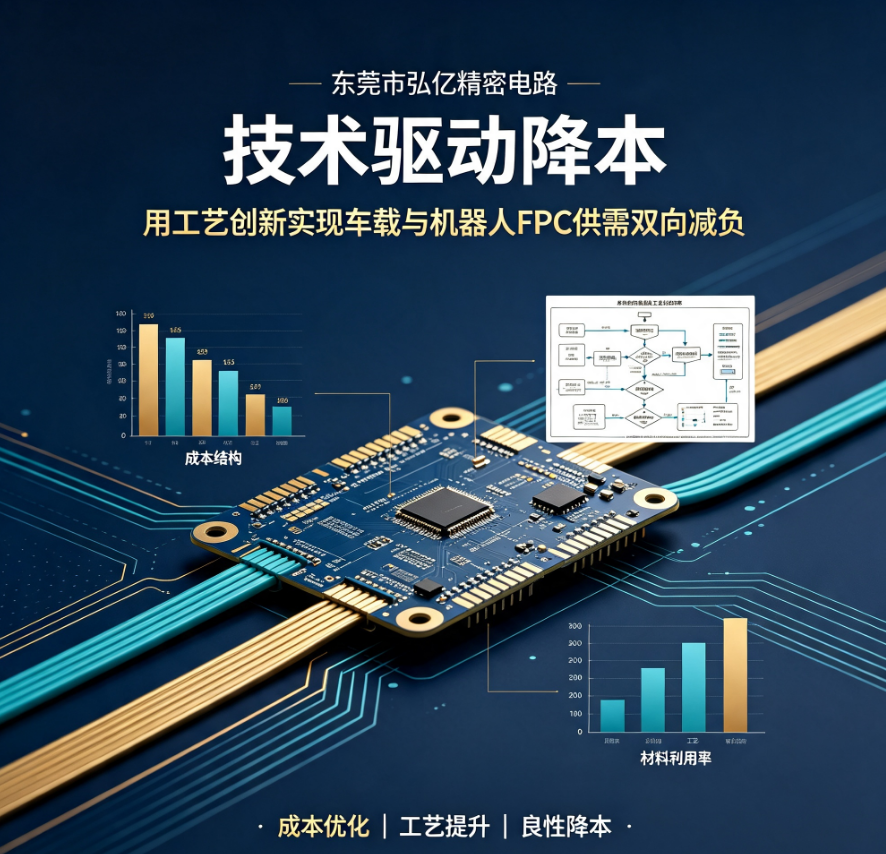
Hongyi Precision formed a cross-departmental cost optimization task force, conducting a four-month process review of its robotics and automotive FPC product lines. The team completed 68 experimental trials, optimizing circuit layout, etching parameters, stiffener structure, and laser cutting paths—reducing material waste per FPC by 11.6%, unit energy consumption by 9.2%, and rework costs from defects by 34%, all without compromising reliability. These gains were passed on to customers while maintaining original quality standards.
Many customers face a dilemma: high-end automotive and robotics FPCs demand exceptional reliability, yet continuously rising raw material and processing costs are squeezing project budgets. Numerous suppliers resort to crude cost-cutting—simplifying processes or downgrading materials—to lower quotes short-term, ultimately triggering mass defects and higher rework and after-sales costs for customers. Hongyi Precision believes truly effective cost reduction must never compromise product reliability.
Hongyi assembled a dedicated cost optimization task force comprising five R&D engineers, three process engineering specialists, and two procurement specialists. Over four months, the team conducted end-to-end process reviews across robotics and automotive FPC product lines. They executed 68 comparative process trials—improving material utilization through optimized circuit layout, reducing chemical consumption via refined etching parameters, and minimizing base material waste by optimizing stiffener design and laser cutting paths—all without altering electrical performance or reliability specifications. Concurrently, production workflows were streamlined to reduce inter-process wait times and increase overall equipment effectiveness (OEE).
All process modifications undergo three rounds of reliability validation before being approved for mass production. As a result of sustained optimization, high-end FPC material waste per unit decreased by 11.6%, unit energy consumption dropped by 9.2%, and defect-related rework costs fell by 34%. Hongyi shares these efficiency gains with customers—effectively mitigating order price pressure while upholding original quality standards.
Price-based competition has no long-term future; technological innovation is the sustainable path forward. Hongyi Precision refuses to trade reliability for lower prices. Instead, it consistently leverages process R&D to achieve healthy, repeatable cost reduction—delivering high-value, stable, and reliable flexible printed circuit (FPC) solutions to domestic automotive electronics and humanoid robotics manufacturers.