
Applications
Automotive Flexible Circuit Board Solutions
As vehicles electrify and get smarter, FPC is replacing conventional harnesses across smart cockpits and body control.

Key points
Flexible printed circuits bring light weight, high flex endurance, dense integration and resistance to temperature extremes and vibration, allowing them to replace conventional wiring harnesses across EV powertrain, smart cockpit and body control components. Backed by our IATF 16949 system and automotive process controls, we deliver stable volume production for column switches, electronic shifters, wiper systems and switch assemblies.
IATF 16949 system
Automotive process control with complete quality documentation.
Replaces wiring harnesses
Integrated routing cuts connectors and solder joints, raising overall reliability.
Thermal and vibration validation
Thermal cycling, vibration and conductive stability testing to automotive requirements.
Recommended products
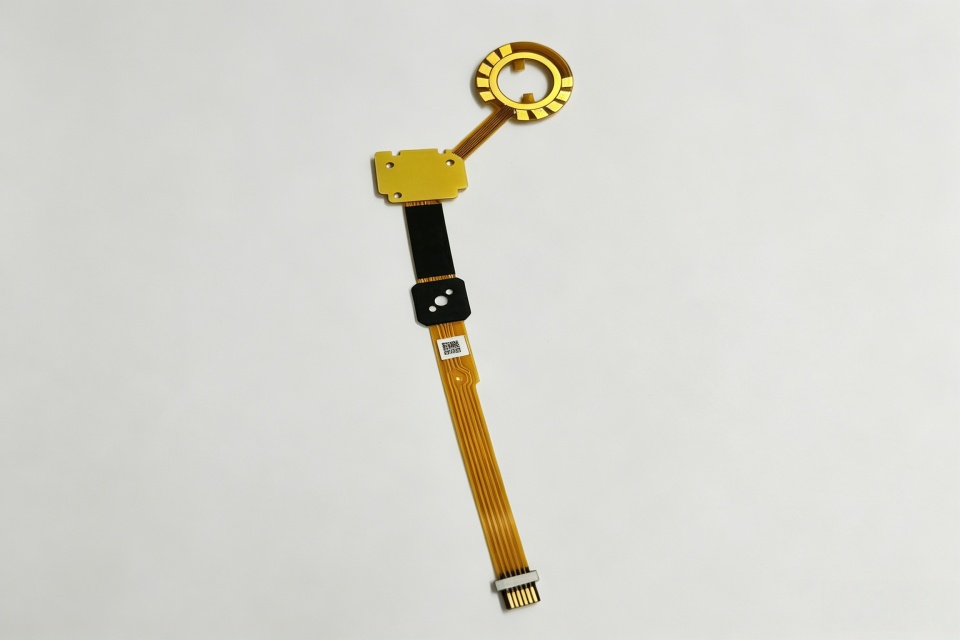
Automotive Switch Interconnection
Automotive Column-Mounted Shifter FPC
Automotive shifter flexible circuit board with high-temperature-resistant PI coverlay, balancing flexural durability and tensile strength.
View details
FPC for Intelligent Cockpit
FPC for Module Touch Interaction Components
FPC for Module Touch Interaction Components is specifically designed for automotive central control displays, instrument clusters, interior ambient lighting, and gear shifters—core intelligent cockpit components—with automotive-grade design for high durability and stability, supporting lightweight construction, curved layout, and high-definition signal transmission.
View details
Smart Cockpit FPC
Seat Pressure Sensor FPC
The seat pressure sensor FPC is used in smart cockpit systems to monitor occupant posture and pressure distribution in real time. It features an automotive-grade flexible printed circuit structure validated through one million flex cycles, thermal cycling (high/low temperature), vibration, and salt spray testing—ensuring high reliability and full traceability.
View detailsRelated reading
What PPAP Documentation Must Automotive FPC Manufacturers Prepare? A Project Approval Evidence Checklist
When automotive FPCs enter production approval, PPAP documentation must align with the customer’s tier level, drawing revision, and actual manufacturing process. This article outlines common items—including design records, process flow diagrams, FMEA, control plans, and measurement and material evidence—along with key verification points.
Learn moreTechnical InsightsHow Automotive FPC Manufacturers Control Batch Consistency: Six Critical Nodes from Incoming Material to Shipment
After initial samples pass validation, batch-to-batch consistency of automotive flexible printed circuits—across materials, key processes, inspection, and assembly outcomes—becomes more critical than single-sample performance. This article outlines six key control nodes aligned with the production flow.
Learn moreTechnical InsightHow FPC Manufacturers for Electronic Shifters Design the Connector End: Thickness, Stiffener, and Pad Layout Must Be Evaluated Together
The connector end of an electronic shifter FPC simultaneously handles positioning, mating/unmating, electrical connection, and mechanical loading during assembly. Poor design can lead to abnormal insertion force, unstable contact, or pad damage. This article summarizes key review points for the connector end.
Learn moreProcess parameters and manufacturing capability
The figures below reflect our production-proven capability window. For special structures, please talk to our engineering team for a detailed assessment.
Learn moreQuality built to pass the toughest qualification
Hongyi Precision is certified to ISO 9001, ISO 14001 and IATF 16949, with a quality system spanning design, manufacturing and delivery.
Learn moreSend us your drawings
Share your Gerber files or specification and our engineering team will assess manufacturability, advise on process and stack-up, then move your project through sampling and volume production to automotive standards.