
Wiper Control Switch FPC
This wiper control switch FPC is used for in-vehicle signal transmission. Hongyi Precision’s R&D team has developed a mature differential signal routing solution through extensive testing and validation: CAN and LIN communication differential traces strictly adhere to equal-length, equal-spacing, parallel routing; trace spacing ≥3× trace width; impedance remains continuous along the entire route, eliminating impedance discontinuities and stubs—effectively reducing signal interference and ensuring stable in-vehicle communication while minimizing bus error faults.

Key features
Standardized Differential Trace Layout
CAN/LIN Differential Traces: Equal-Length, Equal-Spacing, Parallel Routing
Controlled-Impedance Design
Spacing ≥3× Trace Width; Continuous Impedance Throughout Entire Route
Stub-Free Routing Architecture
Mitigates Signal Reflection Interference; Enhances Communication Reliability
EMI-Resistant Automotive-Grade Process
Withstands Complex In-Vehicle Electromagnetic Environments
Flexible PI Substrate
Meets Dynamic In-Vehicle Installation Bend Requirements
100% Electrical and Impedance Sampling Inspection
Ensures Batch-to-Batch Communication Consistency
Specifications
- Layer Count
- 1–2 Layers
- Differential Routing Requirements
- Equal Length, Equal Spacing, Parallel
- Differential Trace Spacing
- ≥3× Conductor Width
- Trace Requirements
- Stub-Free; Continuous Impedance Without Discontinuities
- Substrate
- PI 12.5 μm / 25 μm
- Copper Thickness
- 12 μm, 18 μm
- Surface Finish
- ENIG Gold Plating, OSP
- Operating Temperature
- -40°C to 105°C
- Electrical Testing
- 100% Full Inspection
Typical applications
- Wiper Control Switch FPC
- In-Vehicle Sensor Communication Flex Circuit
- Body ECU Module Signal Transmission Flex Cable
- In-Vehicle Sensor Signal Acquisition Flex Circuit
Talk to an engineer
Share your Gerber files or specification and our engineering team will assess manufacturability, advise on process and stack-up, then move your project through sampling and volume production to automotive standards.
Quote NowRelated reading
Designing Automotive Flexible Printed Circuits: Key Considerations for Temperature Resistance, Vibration Resistance, and Signal Reliability
Automotive flexible printed circuits (FPCs) must simultaneously withstand temperature fluctuations, continuous vibration, assembly-induced bending, and complex signal transmission. This article outlines pre-prototyping design verification points for automotive FPCs—from material stack-up and dynamic/static bend zoning to reinforcement strategies, CAN/LIN routing, and reliability validation.
Learn moreIndustry insightAutomotive FPC penetrates core vehicle components
As vehicle electrification and intelligence continue to accelerate, flexible printed circuits are replacing conventional wiring harnesses across EV powertrain, smart cockpit and body control components, thanks to light weight, high flex endurance, dense integration and resistance to temperature extremes and vibration.
Learn moreRelated products
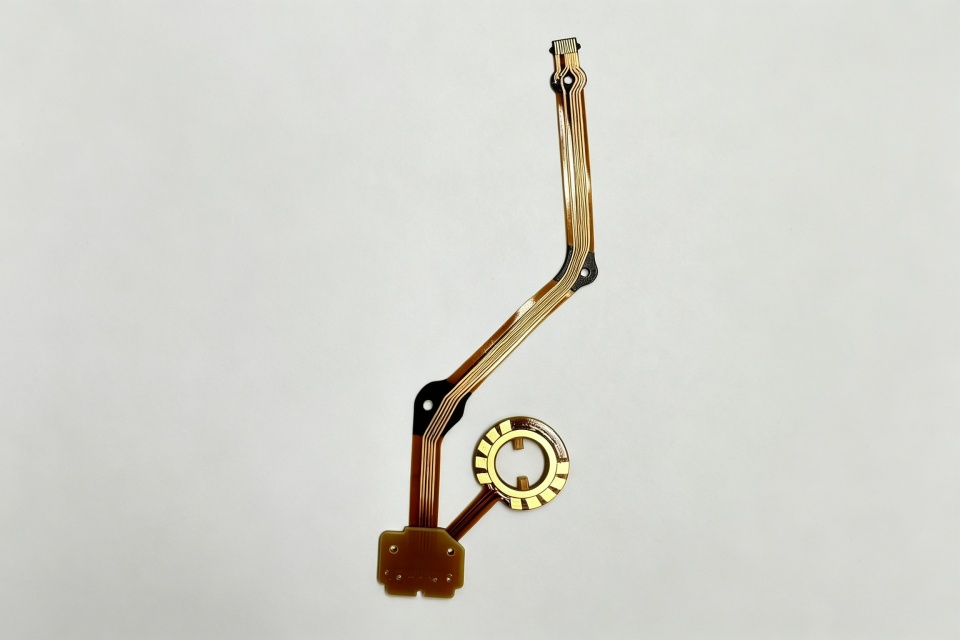
Sensor Interconnection
Electronic Shift Sensor FPC
Automotive electronic shift position sensing FPC, with optimized trace routing in bending zones to eliminate stress concentration points and significantly extend repeated flex life.
View details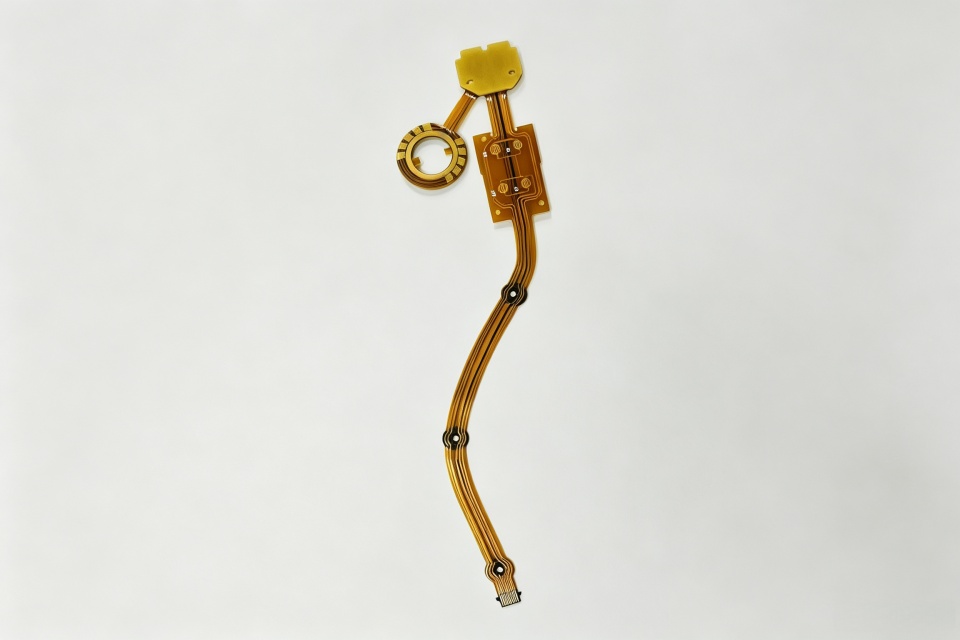
Sensor interconnection
Electronic gear shifter rolled copper FPC
Automotive electronic gear shifter sensor flexible circuit board; high-elongation rolled annealed (RA) copper foil is used in dynamic flex zones to withstand millions of reciprocating bends, solving long-term cracking and open-circuit failures.
View details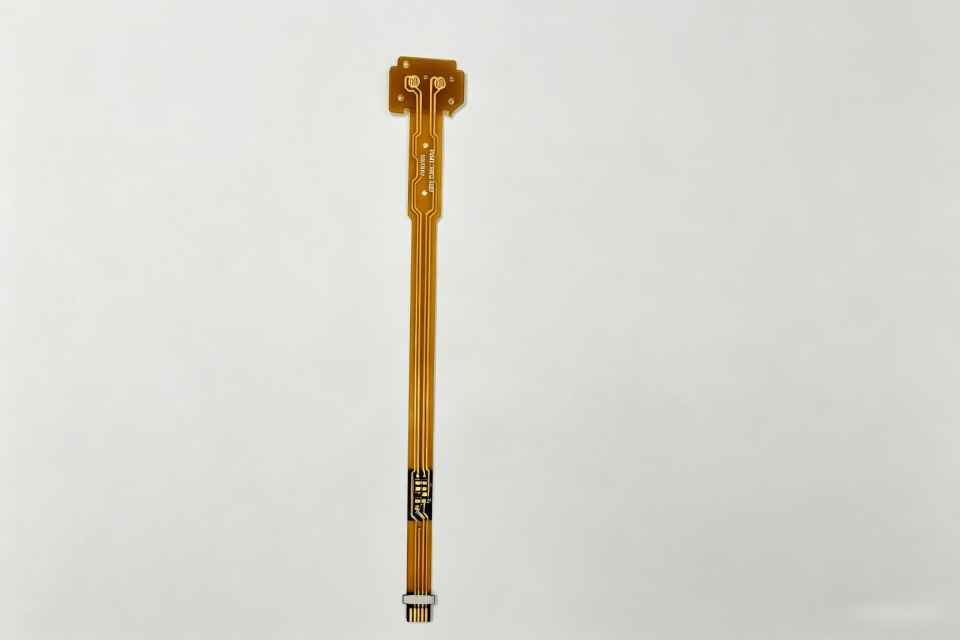
Electronic gear shifter, shift-selector FPC
Electronic Gear Shifter FPC
Integrated automotive electronic gear shifter FPC with built-in conductive ring, designed for gear-position angle signal acquisition.
View details