
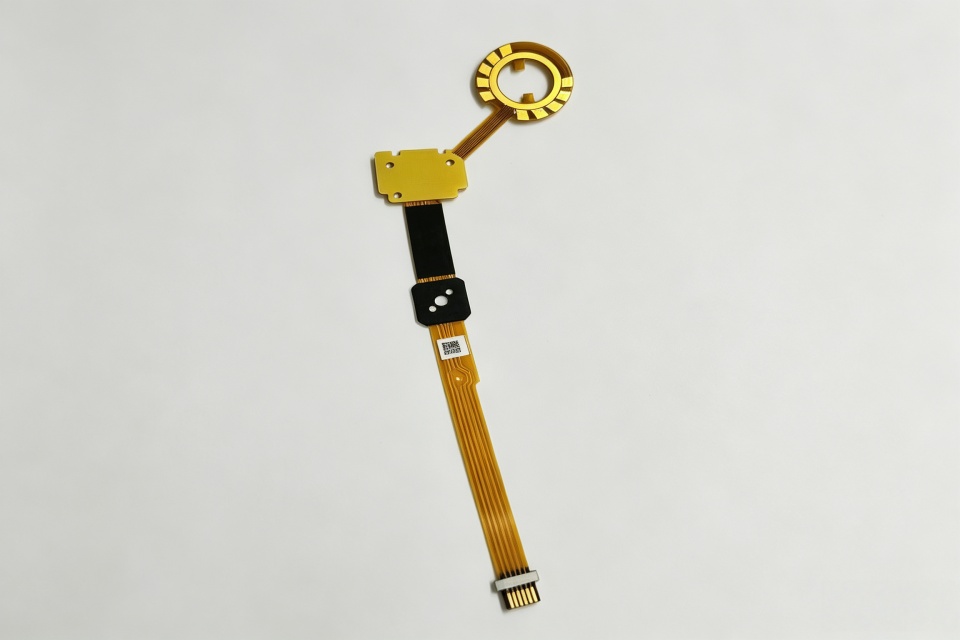
Automotive Column-Mounted Shifter FPC
This automotive shifter flexible circuit board uses high-temperature-resistant PI coverlay to enhance tensile strength while maintaining excellent flexural durability—effectively preventing assembly tearing. After nearly one year of R&D and validation, Hongyi Precision has launched two thickness options: 0.025 mm and 0.05 mm. The material exhibits outstanding performance across wide temperature ranges, resisting low-temperature embrittlement and high-temperature softening/deformation. It offers strong adhesion and resists lifting or cracking after repeated flexing—ideal for long-term stable operation in automotive rotary sensing mechanisms.
Key features
High-Temperature-Resistant PI Coverlay
Dual optimization of flexural durability and tensile strength to prevent assembly tearing
Two coverlay thickness options available
0.025 mm and 0.05 mm thickness options provided
Wide-Temperature Stability
Mitigates risks of low-temperature embrittlement and high-temperature softening/deformation
Strong coverlay adhesion
Resists lifting or delamination/cracking under repeated flexing
Precision trace fabrication
Ensures continuous, stable angular sensing signal output
100% electrical full inspection
Strict control of batch-to-batch quality consistency
Specifications
- Layers
- 1–2 layers
- Minimum trace width/spacing
- 60/60 μm
- Base material
- PI 12.5 μm / 25 μm
- Copper thickness
- 12 μm, 18 μm
- Coverlay
- High-temperature-resistant PI film, 0.025 mm / 0.05 mm optional
- Surface finish
- ENIG gold plating, OSP
- Operating temperature
- –40 °C to 105 °C
- Electrical testing
- 100% full inspection
Typical applications
- Automotive angular position sensor
- Automotive electronic shifter sensing module
- Steering angle detection assembly
- Signal flex cable for automotive rotary mechanisms
Talk to an engineer
Share your Gerber files or specification and our engineering team will assess manufacturability, advise on process and stack-up, then move your project through sampling and volume production to automotive standards.
Quote NowRelated reading
How Automotive FPC Suppliers Support Project Launch: Key Milestones from Quotation to PPAP
From quotation to mass production, automotive electronic FPC development involves requirement clarification, DFM, prototype build, design validation, process validation, and PPAP. A supplier’s ability to deliver correct documentation and close risks at each stage directly impacts project timeline. This article outlines the project launch responsibilities of automotive electronic FPC suppliers.
Learn moreIndustry InsightsHow to Conduct Reliability Validation for Automotive Electronic FPCs: Correlating Lab Tests with Real Vehicle Operating Conditions
Reliability validation of automotive electronic FPCs cannot rely solely on a single pass in the lab. Temperature cycling, vibration, bending, damp heat, and post-assembly electrical performance must all correlate with actual vehicle mounting locations and operating conditions. This article maps common validation tests to field failure risks—helping customers develop more effective validation plans for automotive flexible circuit boards.
Learn moreIndustry InsightsWhat to Review in DFM for Automotive FPCs: A Risk Checklist from Drawing to First Article
The most valuable step before mass production of automotive FPCs is DFM review. Proactively verifying materials, stack-up, trace width/spacing, flex zones, pads, connectors, and test points—before tooling and trial runs—uncovers the majority of high-cost risks. This article presents a first-article review framework tailored for automotive projects.
Learn moreRelated products
Sensor Interconnection
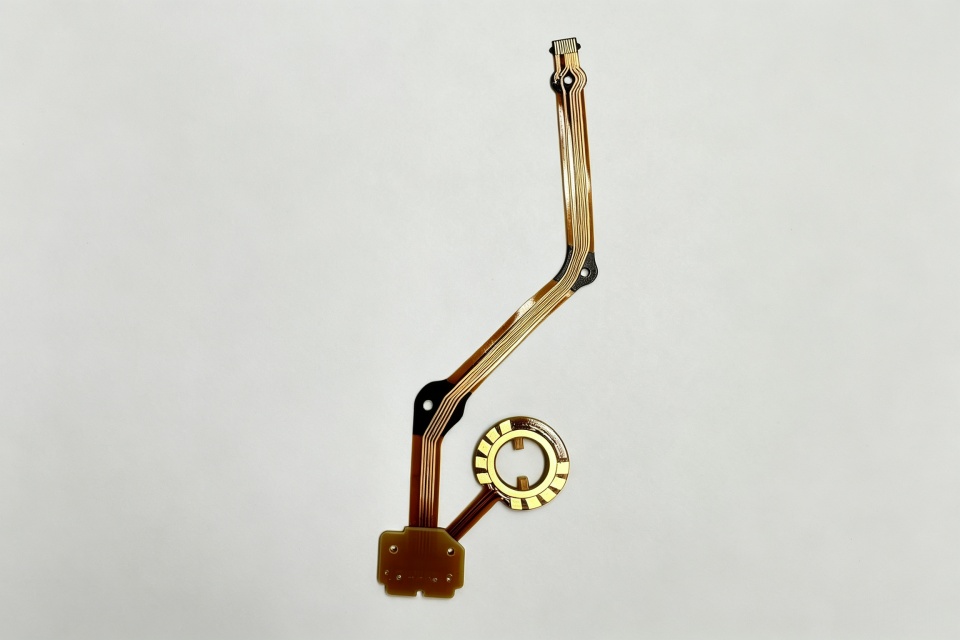
Electronic Shift Sensor FPC
Automotive electronic shift position sensing FPC, with optimized trace routing in bending zones to eliminate stress concentration points and significantly extend repeated flex life.
View details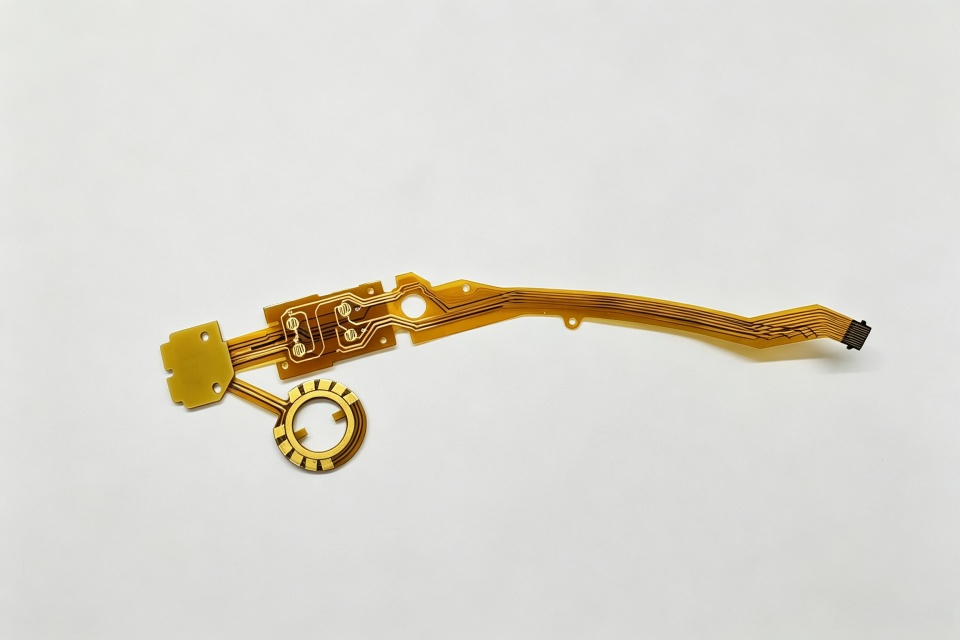
Sensor Connection
Electronic Shifter FPC
Flexible Printed Circuit for automotive electronic shifter mechanisms, featuring dynamic/static bend zone control to manage bend radius and prevent copper foil fatigue fracture, suitable for long-term reciprocating rotational applications.
View details
Sensor Interconnection
Wiper Control Switch FPC
Wiper Control Switch FPC: CAN/LIN differential signal traces follow equal-length, equal-spacing, parallel routing guidelines to maintain continuous impedance and ensure stable in-vehicle bus signal transmission.
View details