
News
Industry developments and technical notes
We follow technical and market developments in automotive FPC and flexible circuits for humanoid robotics, and we welcome the conversation.
Focus areas
FPC replacing automotive harnesses
With light weight, high flex endurance and dense integration, FPC is replacing conventional harnesses across smart cockpits and body control.
Flexible circuits for humanoid robots
A single humanoid robot uses 40-70 flexible circuits, with demand growing quickly for joint drives, tactile dexterous hands and vision modules.
Automotive process and quality
We keep refining our process window and full-flow validation around demanding temperature, flex life and conductive stability criteria.
Company news
 Technical Insight
How Do Dexterous Hand FPCs Reduce Sensor Drift? A Complete Approach from Flexible Structure Design to Calibration Testing
During extended operation of dexterous hands, sensor zero-point drift, tactile signal noise, and resistance variation after bending directly impair grip judgmen…
Read more Technical Insights
EMI and Thermal Management for AI Robot FPCs: Don’t Let High-Speed Signals Fail at the Connection Details
AI robot FPCs must not only withstand joint articulation but also transmit an increasing volume of high-speed signals among vision, communication, and drive sys…
Read more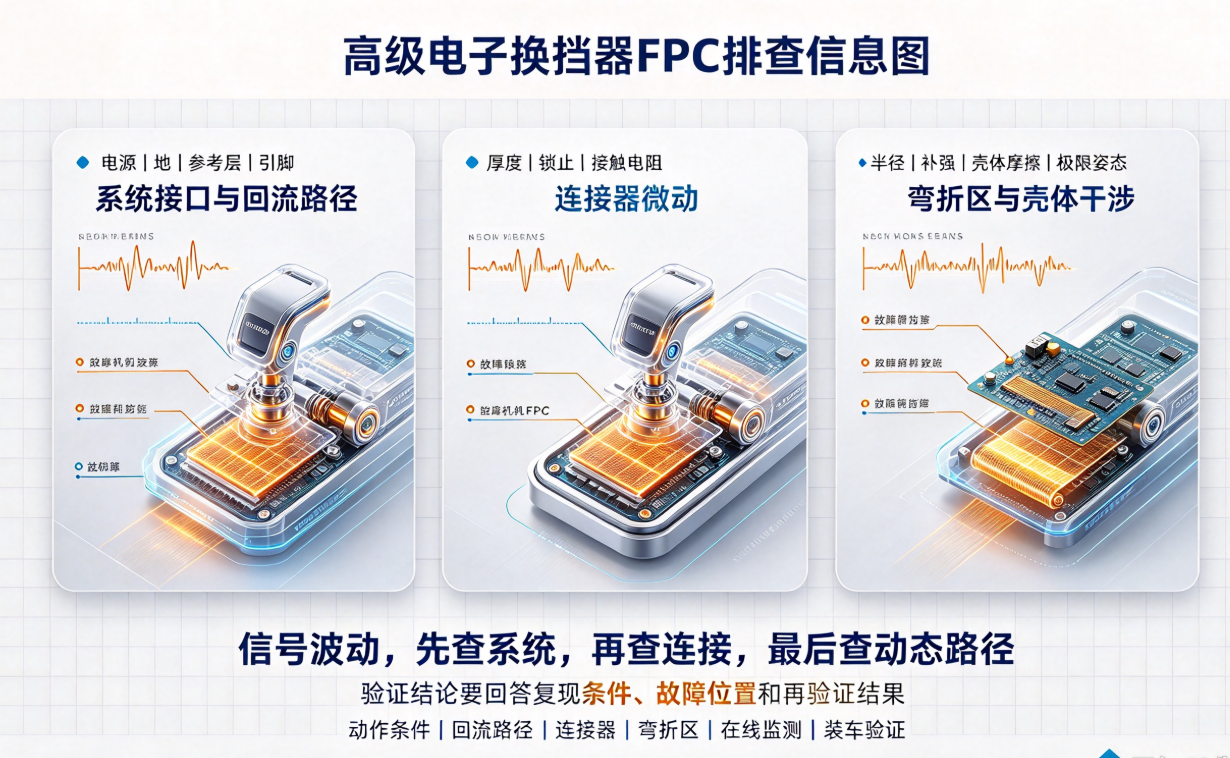 Technical Insight
Signal Fluctuation in Electronic Shifter FPC: Which Section Should the Manufacturer Check First?
An electronic shifter FPC passes static testing but exhibits signal fluctuation after vehicle installation—potential causes include return path issues, connecto…
Read more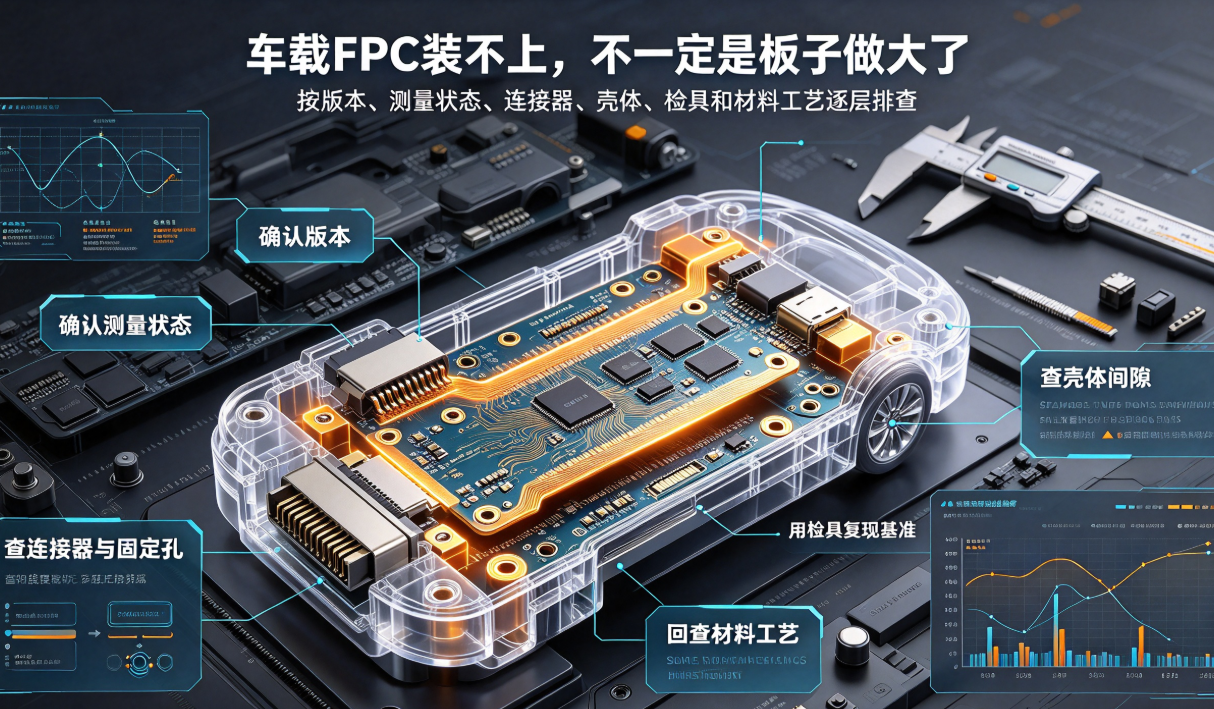 Technical Insight
Why a Vehicle-Mounted FPC Won’t Install: It’s Not Necessarily Oversized—Field Dimension Troubleshooting Sequence
When vehicle-mounted FPCs encounter installation difficulties, root causes may lie in measurement reference, flex state, connector end, mounting holes, or inspe…
Read more