
Smart Wearable Mainboard FPC
Broadly compatible with all categories of consumer electronics; Hongyi Precision’s consumer-grade FPCs are applicable to smart wearables, Bluetooth earphones, tablets, smart home devices, touch modules, and digital accessories—leveraging ultra-thin flexibility, bendability, and 3D conformal mounting to seamlessly match diverse miniaturized and irregular product structural designs.
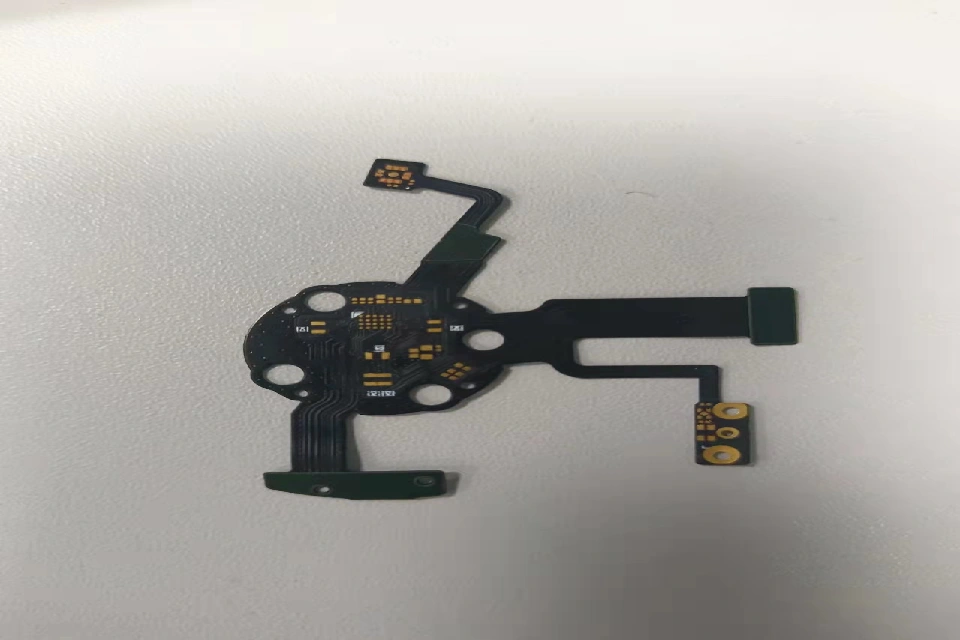
Key features
Mature Design
Optional shielding layer for electromagnetic interference (EMI) suppression, reducing touch drift and false touches;
Reliable Quality
Excellent temperature and humidity resistance, plus superior flex-life performance;
Compact Layout
Ultra-thin flexible polyimide (PI) substrate enabling irregular routing and curved-surface mounting;
Stable Signal Transmission
Precision fine-line circuitry with stable impedance, ensuring touch signal integrity.
Specifications
- Layer Count
- 1–4 Layers
- Minimum Trace/Space
- 50/50 µm
- Base Material
- PI 25/50 µm
- Copper Thickness
- 35/18 µm
- Stiffener Options
- PI or Stainless Steel Stiffener
- Outline Tolerance
- ±0.10 mm
- Operating Temperature
- −40°C to 105°C
Typical applications
- Smart Watches
- Bluetooth Earphones
- AR/VR Goggles
- Action Cameras
- Drones
Talk to an engineer
Share your Gerber files or specification and our engineering team will assess manufacturability, advise on process and stack-up, then move your project through sampling and volume production to automotive standards.
Quote NowRelated reading
How Small-Batch FPC Manufacturers Handle Concurrent Multi-Model Production: Integrated Planning for Line Changes, Panelization, and Traceability
R&D projects rarely involve just one model—they typically advance multiple versions simultaneously, with low volumes and frequent revisions. This article outlines key management priorities for small-batch FPCs, covering production grouping, material preparation, line-change losses, panelization, batch segregation, and replenishment mechanisms.
Learn moreIndustry InsightsHow to Accept FPC Prototypes from a Prototype Manufacturer? A Closed-Loop Process Covering Electrical Functionality, Assembly, and Reliability
Accepting FPC prototypes based solely on continuity and visual inspection often fails to uncover bending, assembly, soldering, and material issues. This article outlines a practical, five-step acceptance methodology—receipt verification, static testing, assembly validation, dynamic validation, and issue closure.
Learn moreIndustry InsightsHow FPC Manufacturers Should Evaluate Process Capability: Don’t Just Report Average Yield—Controlling Variation Is Key
A true assessment of an FPC manufacturer’s capability cannot rely solely on monthly production area or first-run yield. This article outlines how procurement and quality teams can assess process stability by examining critical dimensions, process capability, defect stratification, equipment calibration, and batch trends.
Learn moreRelated products
Consumer Electronics FPC
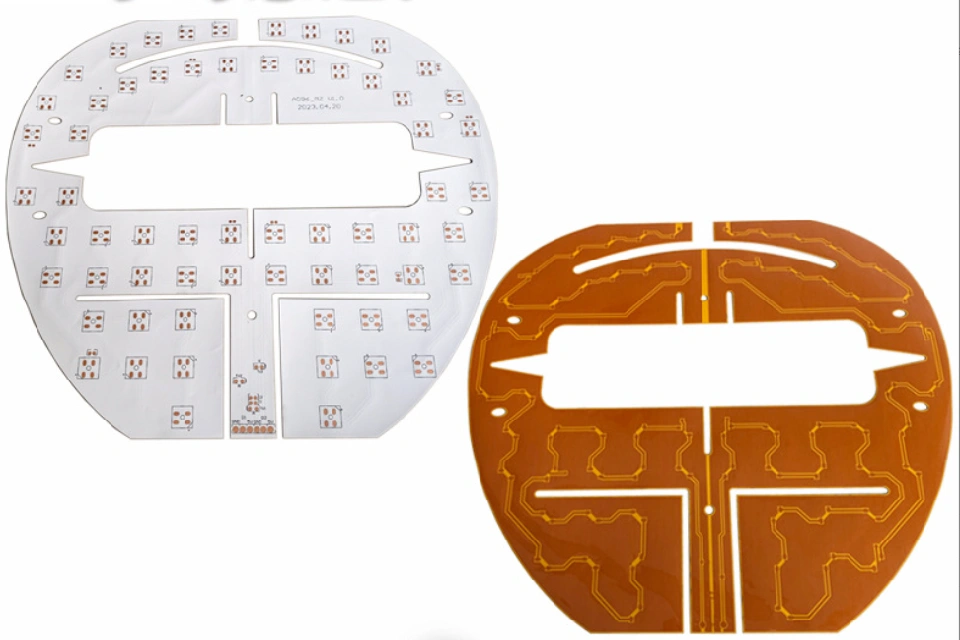
LED Phototherapy Facial Mask FPC
LED phototherapy facial mask FPC for sensor interconnection in flexible LED light therapy masks; uses rolled annealed copper substrate and LDI precision imaging to ensure uniform multi-channel LED current and consistent luminance; supports 3D curved surface conformability, repeated bending, and ENIG pads compatible with SMT reflow soldering.
View details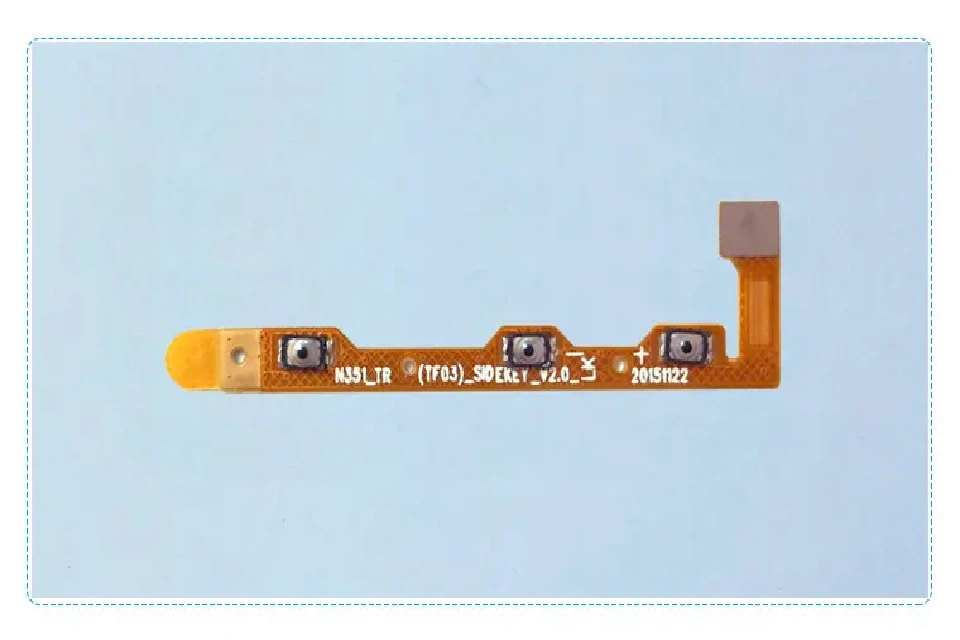
Consumer Electronics FPC
Tactile Switch FPC
Tactile Switch FPC belongs to the sensor interconnection category of flexible printed circuits, specifically designed for touch-key signal transmission in consumer electronics—suitable for wearables, audio devices, smart home products, and touch modules; customized per end-product bending frequency and assembly method.
View details
Consumer Electronics FPC
Custom 0.15/0.2mm Ultra-Thin FR4 PCB
Ultra-thin 0.15mm/0.2mm FR4 rigid PCBs engineered specifically for consumer electronics FPC applications, manufactured on dedicated thin-board production lines to resolve lamination warpage challenges; supports high-Tg substrates and IATF 16949 automotive qualification, suitable for automotive electronics and intelligent modules.
View details